
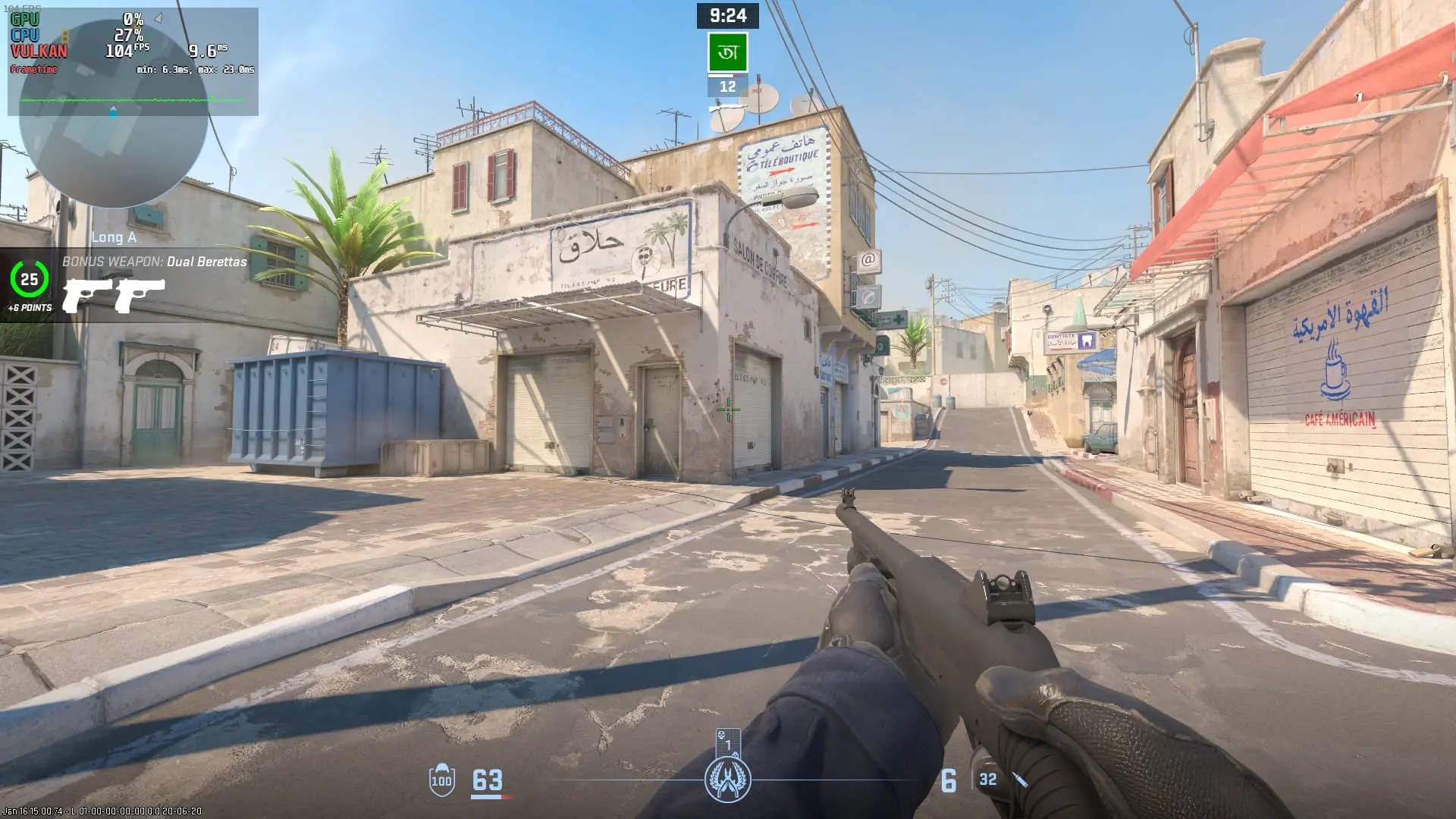
The randoms problem in Counter-Strike 2
CS2 is the most team-dependent shooter in esports, yet most of its playerbase queues with four strangers. No agreed default, no set roles, mid-round calls in three languages, and an economy that one teammate force-buys into oblivion. You can have the cleanest crosshair placement of the lobby and still lose because nobody threw a single support flash all half. Twenty-five years of Counter-Strike history say the same thing: coordination beats aim at every level below pro play.
The deeper issue is stability. A promising lobby occasionally produces a friend request, but a wide skill gap, clashing evenings and different ideas about what "one more" means dissolve most of those connections within days. FACEIT hubs and LFG Discords skew toward sweat-only culture, which leaves the enormous middle of the playerbase (people who want structured, communicative matches without treating every night like a major qualifier) with nowhere to recruit.
How RankMates reads a CS2 player
Your CS2 profile on RankMates comes out of a conversation, not a checkbox grid. Ranky asks where your level actually sits, what role you fall into when a round starts (entry fragger, support, AWPer, lurker, or the poor soul doing the calling), how you play (aggressive peeks versus disciplined utility, solo flanks versus grouped hits, how much you respect the economy), where you compete (Premier, per-map competitive, Wingman, FACEIT or ESEA) and what a good session looks like to you: sweaty grind or relaxed but competent teamplay.
Matching then stays inside hard limits before scoring anything: your region, your platform and a realistic rank neighborhood on the ladder, wide enough to find people, tight enough to stay fair. Inside those bounds it scores what makes Counter-Strike teams click: role complementarity (a team of five entry fraggers retakes nothing), comms expectations, queue format (duo, trio or full five-stack) and whether your play windows genuinely overlap. Every candidate pairing goes through a final AI review that sanity-checks the fit as a whole, and only then does it appear among your daily cards.
What your compatibility score is made of
These are the exact signals your CS2 profile captures, each one asked in the conversation with Ranky:
- Rank & accepted range
- Your current level on the ladder and the range you accept in teammates. Matching keeps pairs within a close rank neighborhood, so a Silver and a Legendary Eagle never cross.
- In-game role
- Entry fragger, support, AWPer, lurker, IGL. Teams need coverage: a second dedicated AWPer scores lower than the rifler your lineup is missing.
- Playstyle
- Aggressive duels versus utility-first patience, solo flanks versus grouped executes, and how seriously you take the economy.
- Modes & scene
- Where you actually compete: Premier, per-map competitive, Wingman, FACEIT or ESEA, and with what intensity. Mismatched intent kills stacks faster than mismatched skill.
- Format & comms
- Duo, trio or full five-stack, how regular you want it to be, and your voice habits: constant callouts or just the useful info, mic required or optional.
- Region & platform
- Your time zone region so sessions can actually happen, and your platform as a strict boundary.
The path to a stable stack
Four moves separate you from a group of people who buy for each other:
- 1
Describe your Counter-Strike
A short chat with Ranky covers your level, roles, modes and what you expect from teammates. Honest answers make sharper matches; nobody checks your stats page.
- 2
Receive a curated shortlist
Each day up to three sealed player cards arrive, pre-filtered by rank neighborhood, region, role fit and schedule, then validated by an AI pass so no random noise reaches you.
- 3
Open cards and pick your people
Flipping a card reveals the compatibility breakdown: where you align on roles, modes and hours. Like the profiles you would trust with your mid-round economy.
- 4
Become mates and boot the server
A mutual like unlocks direct chat and presence. Plan a retake warm-up, a Premier session or a FACEIT queue right there, then add each other on Steam.
Common CS2 questions
Does RankMates work for FACEIT players or only Premier?
Both. The profile conversation asks where you actually compete (Premier, per-map competitive, Wingman, FACEIT, ESEA) and matches you with players from the same scene and mindset. Plenty of players use RankMates precisely to build a roster for FACEIT queues.
I mostly IGL. Can I find players who actually listen?
That is exactly the kind of preference the conversation surfaces. Declaring yourself a caller pairs you with players who said they want structure and follow calls, and away from other dedicated IGLs who would fight you for the reins.
What if my rank is low? Is there a minimum?
There is no floor. Rank matching works identically at Silver and at Global Elite: you meet people from your own neighborhood on the ladder. Lower brackets actually benefit most, since that is where team play is rarest and improves results fastest.
Can I build a full five-stack for league play?
Yes, incrementally. Each mutual like adds a mate, and many users assemble their roster over a week or two of daily reveals. Your mates list becomes the recruiting pipeline: play with people, keep who fits, keep flipping cards for the missing role.
Is any of this paid?
No. Profiles, daily matches and chat cost nothing. The three-cards-a-day cap is a design choice, not a paywall: it keeps every proposed teammate worth an actual look instead of drowning you in profiles.
 ARK: Survival Ascended
 Marvel Rivals
 Minecraft
 Palworld
 Rocket League
 THE FINALS
 Valorant